
How to Choose the Right HGV Recovery Provider for Your Fleet
Choosing an HGV recovery provider is an important part of managing a commercial fleet. When a vehicle breaks down, the quality of the response can affect driver safety, delivery schedules and operating costs.
The right provider should offer more than a number to call. They should understand commercial transport, have access to suitable recovery equipment and provide support when your operation needs it.
For fleet managers, the priority is finding a recovery partner that can respond reliably. This means looking at availability, coverage, technical capability and experience before a breakdown happens.
Why does your choice of HGV recovery provider matter?
A suitable HGV recovery provider helps operators manage unexpected vehicle failures. A dependable service can arrange roadside assistance, assess whether a vehicle can be repaired in place and organise recovery when it cannot continue safely.
The impact of a breakdown goes beyond the vehicle itself. A delayed delivery can affect customers, loading schedules and other vehicles in the fleet. Poor communication can add further pressure for transport managers.
A recovery provider should therefore form part of your wider fleet support arrangements. It should understand the demands of commercial operations and know how to deal with different vehicle types and recovery requirements.
1. Look for genuine 24/7 recovery availability
Commercial vehicles operate outside standard office hours. Night work, early starts, weekend deliveries and long-distance journeys all create the possibility of a breakdown at any time.
Your recovery provider should offer genuine 24/7 availability, including weekends and bank holidays. Check whether the service operates its own control function or relies on third parties to handle every call.
It is also worth asking how the provider manages out-of-hours requests. Can your driver speak to someone who understands HGV recovery? Is there a clear process for passing information to the recovery team?
A 24-hour phone number is only useful if it connects to a service that can coordinate the right response.
Boleyn’s Fleet Tip:
Check your recovery provider’s out-of-hours arrangements before you need them. Make sure drivers and transport teams know which number to call and what information to have ready.
2. Check the provider’s nationwide coverage
Fleet vehicles rarely stay within one town or region. A vehicle may operate across several counties in one shift, travel between distribution centres or complete longer journeys across the UK.
Your recovery provider should be able to support vehicles wherever your operation takes them. Ask whether nationwide coverage is available and how it is delivered.
Some providers use a network of recovery partners. Others operate their own recovery resources alongside a wider network. Neither arrangement is automatically better. What matters is whether the provider can coordinate the response and explain who will attend.
Ask these questions:
- Does the service cover the areas where your vehicles operate?
- Is support available on motorways and major routes?
- Can the provider arrange recovery outside its immediate operating area?
- Who coordinates the job if a partner operator is involved?
- Will your transport team receive updates throughout the process?
A clear answer helps you understand what coverage means in practice.
Need Reliable HGV Recovery Support?
Speak to Boleyn about nationwide commercial vehicle recovery, available 24/7.
3. Make sure the equipment matches your fleet
Not every recovery vehicle is suitable for every commercial vehicle. An HGV with a mechanical failure may need a different recovery solution from a rigid vehicle involved in an incident or a loaded articulated combination.
A capable commercial vehicle recovery provider should have access to equipment suited to the vehicles and situations it handles.
This may include heavy recovery vehicles, appropriate lifting and towing equipment, and low loader transport where a vehicle or item of equipment needs to be moved without being driven.
Discuss your fleet profile with the provider. Explain the vehicle types, weights, configurations and any specialist requirements. Ask how they would approach different recovery scenarios.
The provider should be able to explain what equipment may be required and whether additional arrangements could be necessary.
What should you ask about recovery equipment?
Ask whether the provider has access to the specialist equipment needed to recover your vehicles safely, including different HGV configurations and larger commercial vehicles. The following table highlights the key requirements to check.
| Requirement | What to check |
|---|---|
| Heavy recovery | Access to suitable equipment for HGVs and larger commercial vehicles |
| Vehicle configuration | Experience with rigid vehicles, artics, trailers and specialist vehicles |
| Low loader transport | Whether suitable transport can be arranged where required |
| Roadside repairs | Access to mobile technicians and service vans |
| Incident recovery | Ability to assess the situation and coordinate an appropriate response |
The important point is suitability. A provider should not assume that one recovery method works for every vehicle.
4. Choose experienced commercial recovery operators
Experience matters when dealing with heavy vehicles. Recovery work can involve complex vehicle configurations, restricted access, roadside hazards and operational pressures.
Look for a provider with a proven background in commercial vehicle recovery. Ask how long it has operated, what types of vehicles it supports and what experience its recovery teams have.
Training and competence are also important. The Health and Safety Executive (HSE) highlights the need for suitable equipment, risk assessment and trained employees when carrying out roadside repair work.
You can read its guidance on essential precautions for working roadside.
A provider should be able to explain how it manages safety, assesses recovery requirements and protects drivers and other road users.
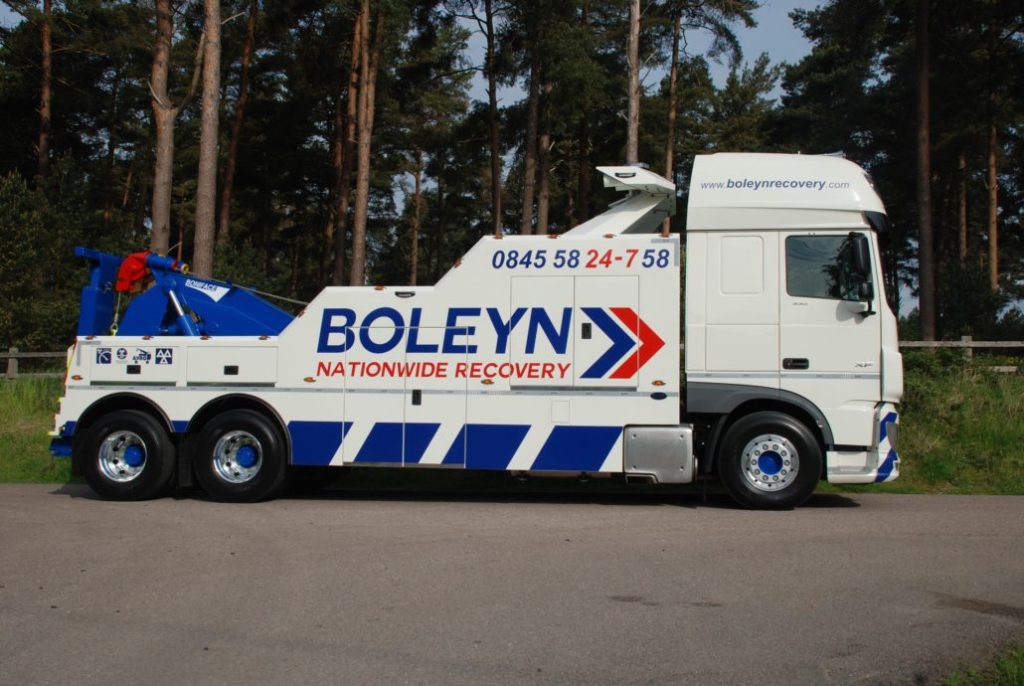
Boleyn Recovery & Fleet Services brings more than 60 years of service experience to commercial vehicle support. Its nationwide heavy recovery operation runs 24 hours a day, 365 days a year, supported by a recovery network and experienced operators.
5. Consider roadside repair capability
Recovery is not always the first or only option. Some faults can be diagnosed and repaired at the roadside or at the vehicle’s location.
A provider with mobile service support may be able to assess the fault and complete suitable repairs without moving the vehicle to a workshop. This can help reduce unnecessary recovery and limit disruption.
However, not every fault can be repaired safely in place. The decision should depend on the defect, vehicle condition, location and safety of the working environment.
Ask whether the provider has mobile service vans, what types of work they can undertake and how they decide when recovery is necessary.
Boleyn operates a fleet of mobile service vans to support diagnosis and repairs at customer premises or roadside locations. Where a vehicle cannot be repaired safely, recovery can be arranged to an appropriate facility.
6. Find out how the provider manages communication
Clear communication is essential during a breakdown. Transport managers need to know where the vehicle is, what has happened and what action is being taken.
A good provider should give your team a clear point of contact. It should also explain how updates are provided and who will communicate any changes to the recovery plan.
Before choosing a provider, ask:
- How are breakdown calls logged and prioritised?
- Will the transport team receive progress updates?
- Can the provider communicate directly with the driver?
- Who confirms the recovery destination?
- How are changes or delays communicated?
These details can make a difficult situation easier to manage.
7. Look beyond the initial recovery cost
Price is important, but it should not be the only deciding factor. A low initial recovery cost may not represent the full value of the service.
Consider the wider operational impact. How quickly can the provider assess the vehicle? Can it arrange a suitable repair? Will it help reduce unnecessary vehicle movement? Does it have the coverage and equipment your fleet needs?
You should also review the provider’s charging structure. Check for call-out fees, mileage charges, waiting time, storage and any additional costs for specialist recovery.
Ask for a clear explanation of what is included. This makes it easier to compare providers on a like-for-like basis.
8. Check how recovery fits into your maintenance arrangements
Recovery should support your wider fleet maintenance strategy. It should not replace planned inspections, defect reporting or preventative maintenance.
The Driver and Vehicle Standards Agency (DVSA) explains that operators must have satisfactory arrangements for maintaining vehicles in a fit and serviceable condition. Its Guide to Maintaining Roadworthiness covers inspection systems, defect reporting and maintenance responsibilities.
A recovery provider can help deal with in-service failures. However, operators remain responsible for their own roadworthiness arrangements.
Look for a provider that understands this distinction. It should be able to support your response to breakdowns while helping your team get vehicles to the right place for further inspection or repair.
HGV recovery provider checklist
Before appointing a provider, use this checklist to compare your options.
- 24/7 recovery availability, including weekends and bank holidays
- Nationwide coverage for your operating areas
- Experience with your vehicle types and configurations
- Access to suitable heavy recovery equipment
- Low loader transport arrangements where required
- Mobile service and roadside repair capability
- Trained and experienced recovery operators
- Clear communication and job updates
- Transparent pricing and additional charges
- A clear process for coordinating recovery and onward repairs
Why choose Boleyn for commercial vehicle recovery?
Boleyn Recovery & Fleet Services provides commercial vehicle support for operators who need dependable assistance. With more than 60 years of service experience, Boleyn understands the demands placed on working fleets.
Its nationwide heavy recovery service operates 24/7, 365 days a year. A recovery network supports vehicles across the UK, while mobile service vans provide diagnosis and repair support where suitable.
Boleyn also offers commercial vehicle servicing and maintenance from its Codham Hall depot near Great Warley, with access to the A127 and M25.
Whether your requirement is roadside assistance, heavy recovery or low loader transport, Boleyn can help assess the situation and coordinate the appropriate support.
Choose Experienced Support for Your Fleet Recovery
With over 60 years of experience and nationwide heavy recovery available 24/7, Boleyn is ready to support your commercial vehicle operation.
CALL 020 8594 5637Frequently asked questions
What should I look for in an HGV recovery provider?
Look for 24/7 availability, nationwide coverage, suitable heavy recovery equipment and experience with commercial vehicles. You should also check roadside repair capability, communication arrangements and pricing.
Do HGV recovery providers offer nationwide coverage?
Some providers offer nationwide support through their own recovery vehicles, partner networks or a combination of both. Confirm that the service covers your fleet’s operating areas and can coordinate assistance outside its immediate region.
Can an HGV be repaired at the roadside?
Some faults can be diagnosed and repaired at the roadside. The decision depends on the fault, vehicle condition, location and safety of the repair. If it cannot be repaired safely, recovery may be required.
Is 24-hour HGV recovery available?
Yes. Some commercial recovery providers operate 24 hours a day, including weekends and bank holidays. Boleyn Recovery & Fleet Services provides nationwide heavy recovery support 24/7, 365 days a year.
How can fleet recovery services reduce vehicle downtime?
A suitable provider can assess the fault, arrange appropriate roadside assistance and coordinate recovery when needed. Clear communication and access to suitable equipment can help reduce delays and unnecessary vehicle movements.
Speak to Boleyn about your fleet recovery requirements
Choosing the right recovery provider gives your transport team a clear plan when a vehicle becomes immobilised. Boleyn Recovery & Fleet Services combines more than 60 years of experience with nationwide heavy recovery support and commercial vehicle maintenance services.
If you are reviewing your fleet recovery arrangements, speak to the team about your requirements.


